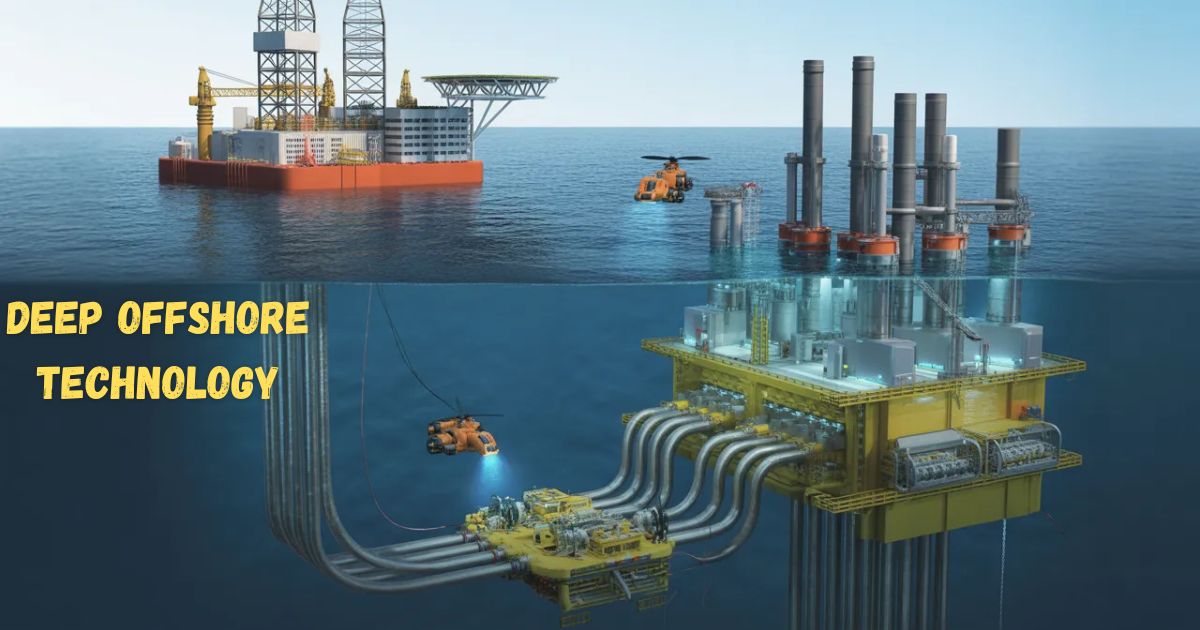
Deep Offshore Technology has turn out to be a cornerstone of contemporary oil and gas exploration, permitting corporations to get entry to reserves previously considered unreachable. As the demand for hydrocarbons grows, improvements in offshore technology hold to redefine the energy sector. We will explores the key elements of deep offshore technology, its subsidiaries, and its impact on oil and gasoline improvement.
What is Deep Offshore Technology?
Deep offshore technology refers to specialized engineering, device, and operational strategies used to explore and extract oil and gasoline resources in waters usually deeper than 500 meters. Unlike conventional offshore structures, deep technologies projects face specific demanding situations, which includes:
- Extreme water pressure
- Harsh climate situations
- Complex subsea installations
- Environmental guidelines
Advances on this technology have made it possible to drill in ultra-deepwater regions, making sure access to formerly untapped hydrocarbon reserves.
Deep Offshore Technology Companies and Subsidiaries
Many main agencies have devoted subsidiaries focusing exclusively on deep offshore operations. These subsidiaries permit for:
- Focused research and development
- Specialised undertaking control
- Danger mitigation in deepwater drilling
| Parent Company | Subsidiary | Focus Area |
|---|---|---|
| Shell | Shell Deepwater | Ultra-deepwater drilling & subsea production |
| BP | BP Deepwater | Offshore exploration & hydrocarbon extraction |
| TotalEnergies | TotalEnergies Subsea | Subsea infrastructure & technology solutions |
| Equinor | Equinor Offshore | Renewable integration & oil & gas operations |
Those subsidiaries power innovation by making an investment closely in subsea technology and automation systems, reducing charges and improving protection.
Core Offshore Technologies
Offshore technologies are crucial for the exploration, extraction, and transportation of hydrocarbons. Key additives encompass:
- Floating Production Storage and Offloading (FPSO) – Ships that technique and save oil in deepwater fields.
- Subsea Systems – Pipelines, manifolds, and wellheads mounted at the seafloor.
- Dynamic Positioning Vessels (DPV) – Ships that keep precise positions without anchors.
- Remote Operated Vehicles (ROVs) – Underwater drones that look at and restore subsea systems.
Those technologies paintings collectively to make sure efficient and secure operations in challenging offshore environments.
Oil and Gas Technology in Deep Offshore Operations
Deep offshore technologies is a subset of oil and gas technology, which makes a speciality of innovative solutions for power extraction. Key tendencies encompass:
- Enhanced Subsea Engineering – Modular subsea systems lessen set up time and preservation prices.
- Automation & AI – Predictive preservation and actual-time monitoring enhance protection and efficiency.
- Eco-Friendly Solutions – Reducing emissions and preventing spills is crucial in deep water initiatives.
- Virtual Twins – Digital models of structures and pipelines optimize performance and limit downtime.
These innovations make certain that businesses can meet worldwide power needs whilst adhering to strict environmental regulations.
Latest Subsea Technology News
Keeping up with subsea technology information is important for enterprise experts. Modern-day trends include:
- Development of self sustaining underwater cars for inspection.
- Advances in subsea energy distribution systems.
- Innovations in deep water drilling systems capable of withstanding excessive pressures.
Subsea Technology News highlights how non-stop R&D allows more secure, quicker, and more cost-powerful deep offshore operations.
Hydrocarbon Technology Applications
Hydrocarbon Technology is essential in deep offshore settings. Key programs encompass:
- Enhanced Oil Recovery (EOR) – techniques to extract more oil from current wells.
- Hydraulic Fracturing Offshore – utilized in positive subsea reservoirs.
- Gasoline Compression systems – Facilitate transportation of natural fuel from deepwater fields.
These technologies are important for maximizing output from offshore reserves at the same time as keeping operational efficiency.
Comparison Table: Shallow vs Deep Offshore Technology
| Feature | Shallow Offshore | Deep Offshore |
|---|---|---|
| Water Depth | Up to 500 meters | 500 – 3000+ meters |
| Platform Type | Fixed or jack-up | Floating FPSO, semi-submersible |
| Operational Cost | Lower | Higher due to complexity |
| Equipment | Standard rigs | Advanced subsea & ROVs |
| Environmental Risk | Moderate | High, requires advanced safety systems |
This table shows how deep offshore technology requires superior engineering and funding in comparison to shallow water operations.
Conclusion
Deep offshore technology has converted the electricity industry, enabling admission to untapped hydrocarbon reserves whilst overcoming severe environmental demanding situations. From specialized subsidiaries to superior subsea structures, this sector combines engineering excellence with cutting-edge innovation. Maintaining up with subsea era information and adopting modern-day hydrocarbon solutions ensures more secure, greater efficient, and sustainable offshore operations.
As oil and gas needs continue to upward push, deep offshore era will remain pivotal, using the destiny of energy extraction in a number of the world’s most challenging environments.