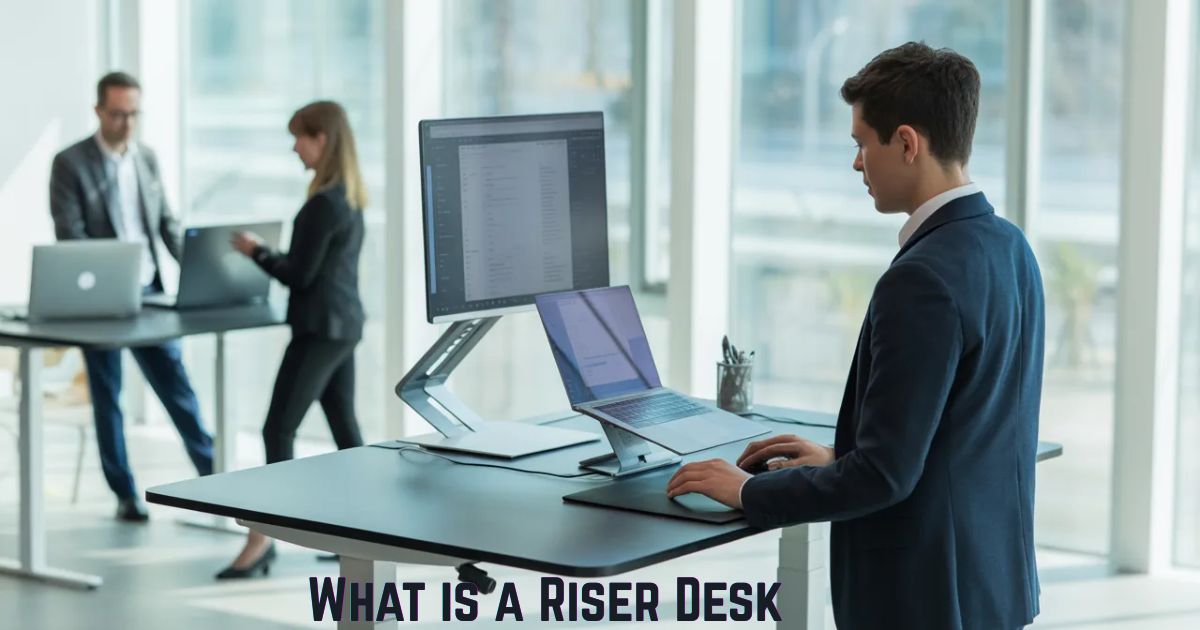
What Is a Riser Desk: additionally known as a Desk converter, is a flexible PC tool that sits on top of your existing desk and allows you to switch between sitting and standing positions. Rather than of replacing your modern-day desk, a riser desk adds top adjustability, making it a popular affordable ergonomic solution.
Many people use riser desks to enhance posture, reduce back pain, and stay more active during long work hours. Whether you work from home or in an office, this simple device can make a big difference in your daily comfort.
How a Riser Desk Fits Into Modern Work Technology
In today’s digital work environment, people spend hours in front of computers. A riser desk helps this setup with the aid of making your laptop more adaptable and ergonomic.
Key Components
An average riser desk consists of integrated:
- Adjustable platform – Holds your monitor or laptop (PC)
- Keyboard tray – Keeps your typing position comfortable
- Lift mechanism – Allows smooth peak adjustment
How It Works (Step-by-Step)
- Place it on your desk – Set the riser desk securely for your integrated table
- Add your devices – positioned your monitor, keyboard, and add-ons on it
- Adjust the height – Pull a lever or press a button + Elevate or decrease the platform
- Switch positions easily – Move between sitting and standing throughout the day
Technology Integrated It
Modern Riser Desks may also integrated:
- Gas spring or pneumatic lift systems
- Electric cars (integrated advanced models)
- Cable management features
- Smart memory settings for height positions
Those features make them easy, safe, and smooth to use.
Different Types of Riser Desks
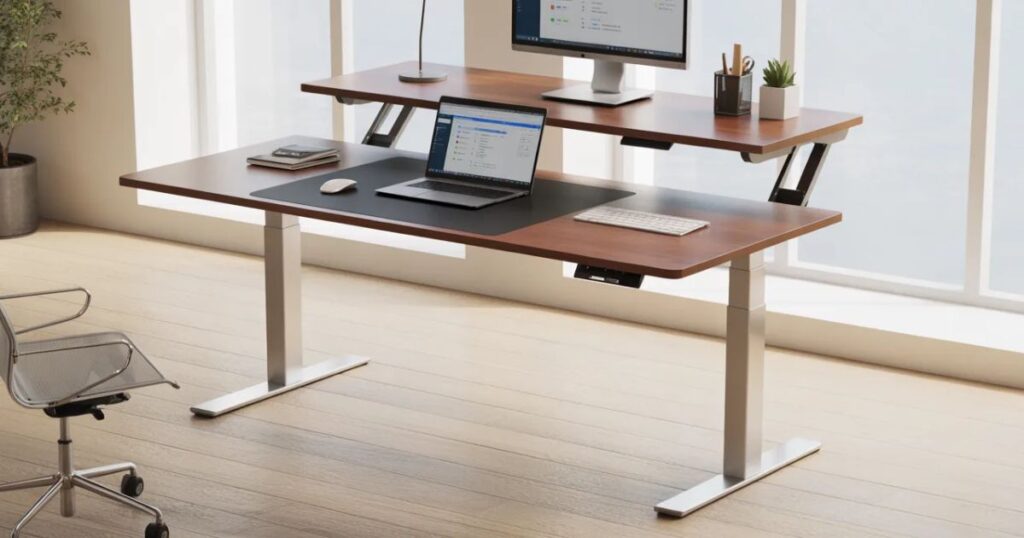
Riser desks comes in numerous designs to fit different desires and budgets.
Manual Riser Desk
- Adjusted by hand or lever
- No energy required
- More affordable
Electric Riser Desk
- Makes use of cars for top adjustment
- Managed by means of buttons
- Offers precise positioning
Single-Level Riser
- One flat surface
- Screen and keyboard live collectively
Dual-Level Riser
- Separate tiers for reveal and keyboard
- Better ergonomic positioning
Compact Riser
- Small length for tight spaces
- Ideal for laptops
Benefits of Using a Riser Desk
Using a riser desk regularly can improve both your health and productivity.
Physical Health Benefits
- Better posture – Keeps your spine aligned
- Reduced lower back and neck pain
- Less sitting time – Encourages motion
Productivity Benefits
- Increased focus and energy
- Reduced fatigue throughout long paintings periods
- Easier task switching
Workplace Flexibility
- Works together with your existing desk
- Clean to move and set up
- Suitable for domestic and workplace use
Desk Riser vs. Standing Desk: What’s the Difference?
Many people confuse riser desks with standing desks, but they may be not the equal.
| Feature | Desk Riser | Standing Desk |
|---|---|---|
| Setup | Placed on existing desk | Full desk replacement |
| Cost | More affordable | More expensive |
| Portability | Easy to move | Usually fixed |
| Installation | Simple | May require assembly |
| Space Requirement | Compact | Needs more room |
| Flexibility | Limited to surface size | Larger working area |
Which One need to You pick?
Pick out a Riser Desk if you:
- Want a budget-friendly choice
- Already have a desk
- Need something portable
Choose a standing desk if you:
- Want a complete workstation upgrade
- Need more space
- Prefer built-in height adjustment
Tips for Using a Riser Desk Correctly
To get the maximum out of your riser desk, observe those easy tips..
Proper Setup
- Keep your screen at eye level
- Position your keyboard at elbow peak
- Integrated a straight posture
Healthy Work Habits
- Alternate between sitting and standing every 30–60 minutes
- Take short breaks to stretch
- Wear comfortable shoes when standing
Not unusual errors to keep away from
- Setting the desk too high or too low
- Standing for too long without breaks
- Ignoring posture while working
- Overloading the riser with heavy equipment
Conclusion
A Riser Desk is a simple yet effective tool that improves your workspace without requiring a full desk replacement. It allows you to switch between sitting and standing easily, making your workday healthier and more comfortable.
FAQs
Q. Is a riser desk good for health?
Yes, it helps reduce sitting time, improves posture, and can lower the risk of back pain.
Q. Can I use a riser desk with a laptop?
Yes, many riser desks are designed for laptops. You may need an external keyboard for better comfort.
Q. How often should I switch between sitting and standing?
It’s best to switch every 30 to 60 minutes to avoid fatigue.
Q. Do riser desks require electricity?
Manual models do not. Electric versions do require power.
Q. Are riser desks stable?
Most high-quality riser desks are stable if used correctly and within weight limits.